Week 8: Social Media in Education
Week 8: Snapchat in the Classroom
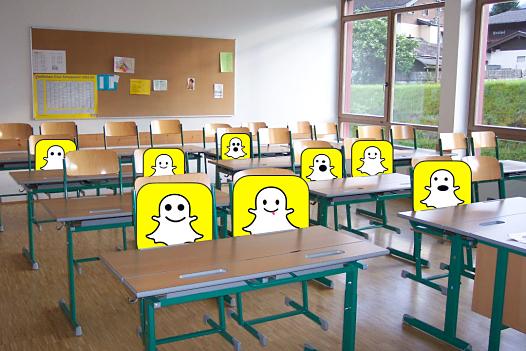 |
| Looks like my students! (Photo illustration by James Zhuang: http://hhsepitaph.com/1416/opinion/satire-snapchat-metamorphosizes-education/) |
Article Information:
Article Link: Getting Started with Snapchat in your Classroom
This article discusses a few main points about Snapchat in the classroom from why use to how to use to. The article basically states that it should be used in the classroom because it is one of the most popular apps/social media platforms and teens are addicted to it. It then goes on to explain that we should only use it if we have a goal for it, we know our culture and we develop any policies that can we written up to ensure the account uses are laid out for everyone involved including admin. Lastly, it gives ideas of how to use it in the classroom to tell stories, give out reminders, demonstrate content examples in real-world, draw/annotate text/pictures, help with studying ideas, professional development and lastly having student create the content through Snapchat to share with others.
Article Link: Getting Started with Snapchat in your Classroom
This article discusses a few main points about Snapchat in the classroom from why use to how to use to. The article basically states that it should be used in the classroom because it is one of the most popular apps/social media platforms and teens are addicted to it. It then goes on to explain that we should only use it if we have a goal for it, we know our culture and we develop any policies that can we written up to ensure the account uses are laid out for everyone involved including admin. Lastly, it gives ideas of how to use it in the classroom to tell stories, give out reminders, demonstrate content examples in real-world, draw/annotate text/pictures, help with studying ideas, professional development and lastly having student create the content through Snapchat to share with others.
My thoughts:
Positive Thoughts/Ideas
1) The article is right! Snapchat is so popular as almost every student in my class have a phone with a Snapchat account on it. It is easy to use and it is basically a fun way to text or tell a story so why not! When I think about its popularity and how addicted students are to using it, it is a "no brainer" on why we as educators wouldn't think of a way to try and implement its "powers" in the classroom.
2) Using Snapchat to share reminders, content, examples, videos and quick facts or real-world relations sounds like an excellent idea! I seriously think this is something my students would actually check and the option of being able to see the story for 24 hours allows them to reference it multiple times. Making reminders and content through Snapchat fun with filters and videos would definitely make them want to view it and actually maybe remember/learn something! I currently use Google Classroom and some of my student will check it and use it to reference videos, agenda, homework/exam reminders, but a majority doesn't. They probably don't check it partially because it's not a easy to remember to check or access as something like a Snapchat app that they are always looking at and because it's bland and Snapchat and other social media is a lot more intriguing with videos, filters, etc.
3) I think it would be cool to start class with some type of warm-up on Snapchat. Allowing them to go on the class story to view the objective for the day and access the warm-up. They can then take a picture or their answer or a video and I think this would make help make the starting class routine a little more entertaining. I also like the idea that the article shares about using it for fun reminders outside of school and sharing real-world examples of math through the app when I notice a good instance or allowing the students to do the same for extra credit opportunities throughout the year.
4) Check out this link for more ideas of how to use Snapchat:
My favorite from this article:
2. Real-world examples — Michael Britt, an adjunct psychology professor at Marist College, finds interesting examples of his psychology content. He sends it to his psychology students in video or pictures on Snapchat. (via NPR) When you see a perfect example of your content in real life, take a picture or video of it and add it to your story.
5) For team bonding for soccer last year, I had my girls split into 2 teams and complete a Snapchat picture/video scavenger hunt list around the school. They loved it! It was a great way to introduced them to each other and it involved something they all know and love...Snapchat! I definitely want to change this activity up and make it useful in the classroom as well because it was such a hit! Highly recommended! Here is the directions I gave them and the list of things they needed to do (feel free to "steal" it, update it and use it if you'd like):
https://docs.google.com/document/d/1x7rqJ5JMHlEJdM9TGZoe3-FPhBcS70t5lkjq2C3Zu5c/edit?usp=sharing
Concerns/Questions
I know the article stated one should make a policy for use to help remind students of the purpose of the Snapchat account and also for administrative reasons. There is my question or concern that stemmed from this though on policies. I agree that a policy is needed to keep a goal in mind and make it use friendly and everything, but what happens when a student posts something they shouldn't have. If I give access to a two-way communication to allow them to comment back, make their own snaps to me, etc, then I also have access to their stories and what they post. Do I really want to put myself in that position? I am thinking okay I make an account and the students all get access to it on their personal accounts that's one-way communication were they can see my snaps, but to make it more powerful I would want to friend them to give them access to communicate back. However on their personal accounts, they could forget I have access to it and I view a student's story and they are doing something illegal or inappropriate and now I am legally suppose to report it and all of a sudden this idea is a train wreak. I think the obviously answer would be have them create professional Snapchat pages right? But that would mean that they would need to login in and out of their personal/professional accounts which makes it not as easy to access and remember which defeats the purpose. This is my biggest and admins biggest concern about social media and "befriending" students so it worries me and I'm not sure how to handle this when students have personal accounts. This is why I like Google Classroom and other more professional apps/programs/social media platforms because students tend to be more responsible, however, they don't check it as much due to it not being fun and easy to access like the popular, personal accounts on Snapchat, Twitter, Instagram, Facebook, etc.
Positive Thoughts/Ideas
1) The article is right! Snapchat is so popular as almost every student in my class have a phone with a Snapchat account on it. It is easy to use and it is basically a fun way to text or tell a story so why not! When I think about its popularity and how addicted students are to using it, it is a "no brainer" on why we as educators wouldn't think of a way to try and implement its "powers" in the classroom.
2) Using Snapchat to share reminders, content, examples, videos and quick facts or real-world relations sounds like an excellent idea! I seriously think this is something my students would actually check and the option of being able to see the story for 24 hours allows them to reference it multiple times. Making reminders and content through Snapchat fun with filters and videos would definitely make them want to view it and actually maybe remember/learn something! I currently use Google Classroom and some of my student will check it and use it to reference videos, agenda, homework/exam reminders, but a majority doesn't. They probably don't check it partially because it's not a easy to remember to check or access as something like a Snapchat app that they are always looking at and because it's bland and Snapchat and other social media is a lot more intriguing with videos, filters, etc.
3) I think it would be cool to start class with some type of warm-up on Snapchat. Allowing them to go on the class story to view the objective for the day and access the warm-up. They can then take a picture or their answer or a video and I think this would make help make the starting class routine a little more entertaining. I also like the idea that the article shares about using it for fun reminders outside of school and sharing real-world examples of math through the app when I notice a good instance or allowing the students to do the same for extra credit opportunities throughout the year.
4) Check out this link for more ideas of how to use Snapchat:
My favorite from this article:
2. Real-world examples — Michael Britt, an adjunct psychology professor at Marist College, finds interesting examples of his psychology content. He sends it to his psychology students in video or pictures on Snapchat. (via NPR) When you see a perfect example of your content in real life, take a picture or video of it and add it to your story.
5) For team bonding for soccer last year, I had my girls split into 2 teams and complete a Snapchat picture/video scavenger hunt list around the school. They loved it! It was a great way to introduced them to each other and it involved something they all know and love...Snapchat! I definitely want to change this activity up and make it useful in the classroom as well because it was such a hit! Highly recommended! Here is the directions I gave them and the list of things they needed to do (feel free to "steal" it, update it and use it if you'd like):
https://docs.google.com/document/d/1x7rqJ5JMHlEJdM9TGZoe3-FPhBcS70t5lkjq2C3Zu5c/edit?usp=sharing
Concerns/Questions
I know the article stated one should make a policy for use to help remind students of the purpose of the Snapchat account and also for administrative reasons. There is my question or concern that stemmed from this though on policies. I agree that a policy is needed to keep a goal in mind and make it use friendly and everything, but what happens when a student posts something they shouldn't have. If I give access to a two-way communication to allow them to comment back, make their own snaps to me, etc, then I also have access to their stories and what they post. Do I really want to put myself in that position? I am thinking okay I make an account and the students all get access to it on their personal accounts that's one-way communication were they can see my snaps, but to make it more powerful I would want to friend them to give them access to communicate back. However on their personal accounts, they could forget I have access to it and I view a student's story and they are doing something illegal or inappropriate and now I am legally suppose to report it and all of a sudden this idea is a train wreak. I think the obviously answer would be have them create professional Snapchat pages right? But that would mean that they would need to login in and out of their personal/professional accounts which makes it not as easy to access and remember which defeats the purpose. This is my biggest and admins biggest concern about social media and "befriending" students so it worries me and I'm not sure how to handle this when students have personal accounts. This is why I like Google Classroom and other more professional apps/programs/social media platforms because students tend to be more responsible, however, they don't check it as much due to it not being fun and easy to access like the popular, personal accounts on Snapchat, Twitter, Instagram, Facebook, etc.

Wow, have you raised a big issue here! Now mandated reporter status applies to social media. That is overwhelming. Still, I think there's an opportunity here. Just like we reflected on the question of personal/professional accounts on the social media snapshot, there are clear benefits or even necessities to having separate accounts. It's a good object lesson in social media literacy and digital citizenship. I think you just made the best argument yet for maintaining separate accounts!
ReplyDeleteI definitely like the idea of utilizing Snapchat in the classroom because I myself use this form of social media many times a day. However, the concerns that you bring up are definitely significant concerns that would require looking into before implementing. I also teach elementary school, so not all students have their own devices or permission to have social media accounts. Did the article mention that every student would need a device and account of their own? Any suggestions on how this would work if not all students had access to both of those? It seems like the possibility of using Snapchat in the classroom is geared more towards high school aged kids as opposed to elementary school kids.
ReplyDeleteI would agree that it would be more accessible for high school and maybe even middle school level student than elementary were many don't also have phones/the app. Using technology only really works if they have access to it. If your school is one to one, I would say you can also screen shot/screen cast your phone of your snaps and post it on a class website or whatever to keep the fun but make it more accessible...maybe...just an idea!
DeleteThanks so much for sharing your Doc and the great suggestions. What if you created a policy that has to be signed by both parent AND student essentially saying that if you see anything inappropriate you will need to take action (which could be student conference first, then parent conference, etc.). In many instances the students won't be posting inappropriate content if they know you are looking. In all honesty, what better way to teach them ethical and responsible use than to use it like they would in everyday life?
ReplyDelete